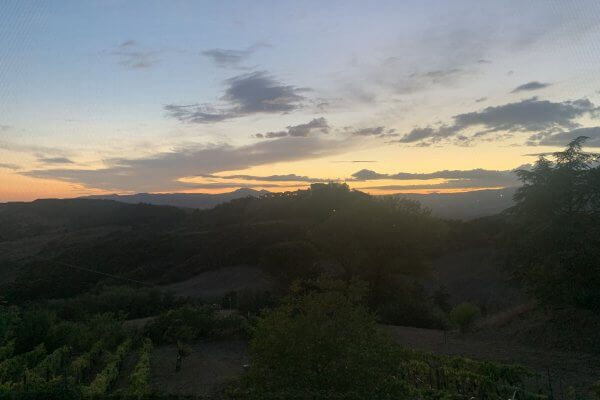
First, where is Racha? Northwest of Georgia (no, not Atlanta). Not far from Imeriti. Gorgeous. Rich in terroir; iron, carbon, granite, slate, marcasite, quartz, limestone of all colors that is crawling with ancient crustaceans. The place is a raw nerve of terroir.
Yet the mountainous, pulse-stoppingly beautiful highland-like region is gravely under-utilized and way too poor. This, Georgia's smallest wine region with no bottle-ready wine maker currently on the market--is a land in need of champion. No foreign star winemaker such as Raul Perez/Telmo Rodriguez is on the horizon. Given my prejudice about wine, this is a good thing.
But some of Georgia's best, committed to making wine close to nature--like Imertian Ramaz Nikoladze, or the Kartlians Niki Antadze and Iago Bitarishvili or Khaketian Gela Patalishvili--could help some of the home talent wanting to come to local and foreign tables. But right now these local superstars are also struggling to make a dream happen-- as all were born in Soviet times when there no dreams were allowed.
Georgian wines--the good ones-- are in demand. France, Italy, London, Japan and increasingly New York are on board. Japan is actually super nuts over them. Buyers are begging for magnums. But it's not so simple. The guys here are forced to deal with issues few winemakers from acclaimed territory have to: Can they afford the bigger bottle? Even if some of the above are lucky enough to have indoor flushables, can they afford the different corks? These excellent vignerons, the small ones--and no one is under 35--(and a good dose are way over 50) are under-financed. Every decision they make here is weighed very heavily. Yet show up unannounced even? They turn out every table as if it were a feast. Hospitality in this country defies the pocketbook -- it is their mission, joy and victory.
In Georgian stay, I learned lessons. One of them was at the benefit of spending many days relying on outhouses, not knowing how or where to wash my hands, how to shower and had no idea how to brush my teeth. My initial reaction was like watching the dentist inch towards me with a sharp tool. In early morning calls (Oh, no! I said to my gut as it rumbled with the strange bacteria it's not used to.) I tried to coat the nostril hairs. I tried to keep myself steeled from the morning winds and mostly I felt in my bones how lucky I was that back home I a pull chain toilet five floors above. But I also was painfully aware of my city-girl spoiled life and marveled at those who not only can cope but do so with not one second of complaint. It made me think --about all of the frills I love, the lipstick, the change of clothes, the electric toothbrush, the short hop to my water closet.
You see, in Georgia this is a commonplace situation not the exception. It doesn't make a difference how lovely the house, how intricate the work, most houses outside of the city still have the little hut on the outside. And then there are those roads that wreck cars --a paved road is as rare as a need for a plunger.
Lessons were learned. Perhaps my vanity was cured--at least until I get back home. I had no choice but to gave myself over to the experience, including the vine's vipers. This visit was through the different looking glass.
So, is there any other top wine country in the world struggling to make their wine under such conditions? I've seen so many 'wineries' here, without easy access to water. But yet the best of the wines are clean, lovely, energetic and vibrant. Is it a miracle or is it just that they found the way to make wine with truly as little intervention as possible and present us with something salubrious and delicious.
In my short stay I began to see the truth that ...
one can tell alot about the quality and care of wine based on the way one cares for their outhouse.
Yes.
The wine was peasantly drinkable. The red blend not too far from gamay and the white, a quaffable mix with a little qvevri stink at first that blew off nicely. The man won't sell it, and his wife kept on pouring me lakes into my glass.
Georgian wine not just as a privilege but as a necessity. I believe in them, it's a Kickstarter campaign with a great reward program.
More about this in the August issue of The Feiring Line (If you dare. Some of the material will indeed be scatalogical.)

Recent Comments